
Threats
Singapore Says It Investigated Alice Huang and Released Her. Malaysia Orders Data Centres to Cut Off the Seven.
A day after Washington blacklisted Megaspeed and six affiliated companies, the two governments whose territory the network used have answered on the record. Singapore’s prime minister says his country investigated the woman at the centre of the espionage reporting and let her go. Malaysia says its data centres will be told to serve none of the seven, and that one name on the American list does not exist in Malaysia at all.
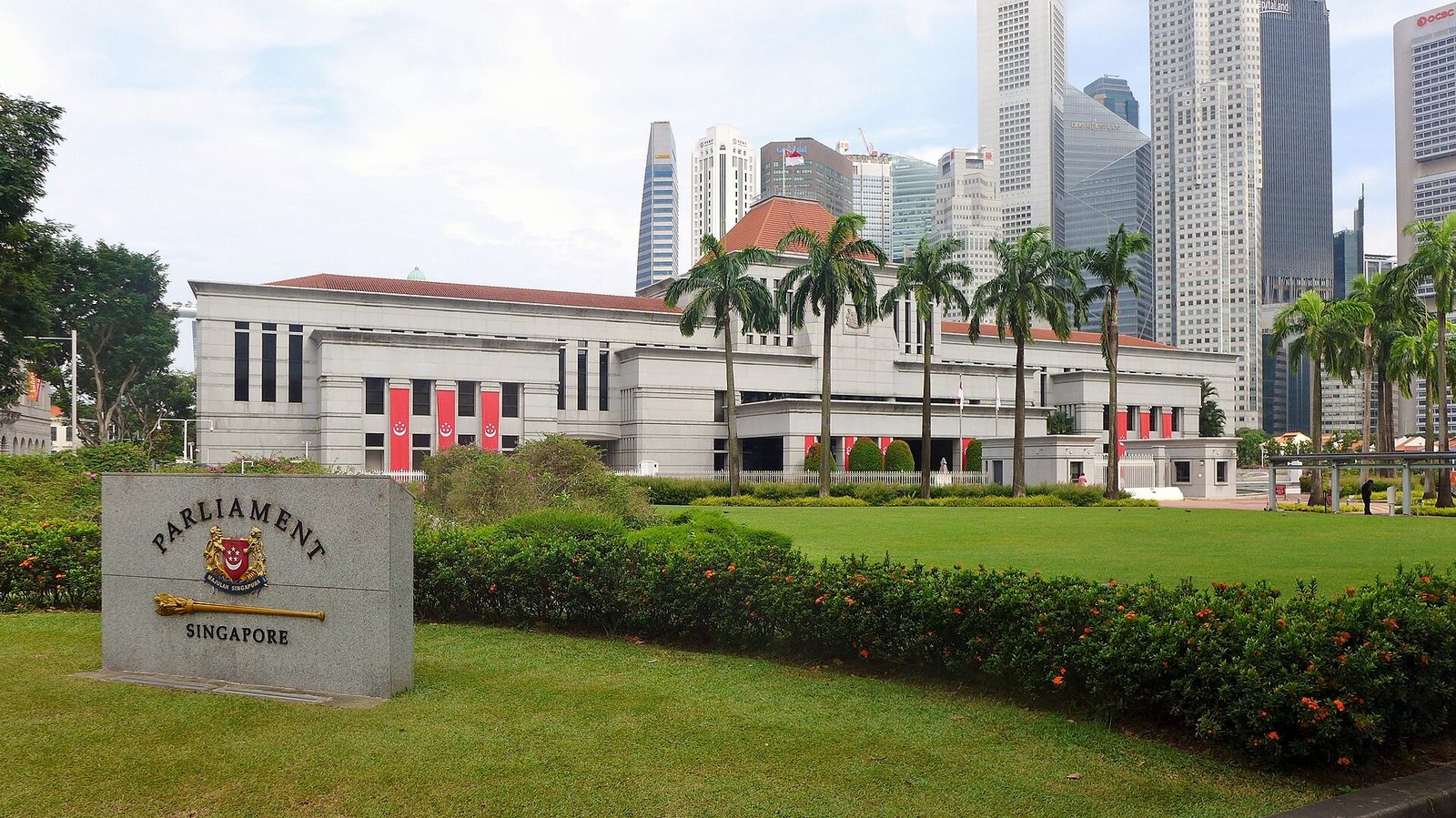
Photo: Bahnfrend, CC BY-SA 4.0, via Wikimedia Commons
Lawrence Wong, Singapore’s prime minister, was in Canberra on Tuesday for the annual leaders’ meeting with Australia when a reporter asked what concerns Singapore had raised with the United States in 2025, when its authorities began investigating Alice Huang and Megaspeed. His answer, recorded in the Prime Minister’s Office transcript of the joint press conference, is the fullest account any government has given of the Singapore end of this case, and it separates the two investigations that Washington’s coverage has often run together.
“We do not enforce America’s export controls,” Wong said. “But we do not want Singapore to be used and abused as a conduit by companies who circumvent America’s export controls.” Singapore’s practice, he said, is to facilitate checks by the United States to enforce its own laws, and to act firmly itself where companies breach Singapore law. On that basis, he said, Singapore investigated Megaspeed, a Singapore-based entity, and investigated Alice Huang herself. “With Alice Huang, we took her in, we investigated her, but we eventually released her because there was no basis for further prosecution. America understands what we have done.”
The chips that never arrived
The Megaspeed investigation, Wong said, continues, and its question is narrower than the one in Washington: whether Megaspeed breached Singapore laws. He added a fact that reframes the geography of the case. “With Megaspeed, the chips that they bought from Nvidia, did not even enter Singapore. The chips were routed to other countries.” Singapore cannot investigate everything happening in third countries, he said, and needs more information from the American side about where the end users are, to verify documents. Asked whether America had done enough to help, he answered: “We did ask for some information, not all of it was forthcoming.” Discussions with the American authorities, he said, are continuing.
On Jensen Huang, whose reinstatement by Nvidia’s board was the news that prompted the question, Wong declined to be drawn. Singapore is not involved in those investigations, he said; it is for the American government and Nvidia’s board to decide, and there may still be ongoing checks. Where Singapore is concerned, he said, the work is its own: investigating companies that breach its laws, and companies using the city state as a waystation for chips bound for Southeast Asia or beyond. The two governments are working closely, he said, on information sharing and on a mechanism by which America can run its own enforcement.
Malaysia answers, and corrects the list
Malaysia’s Ministry of Investment, Trade and Industry issued its own statement on Tuesday. The Malaysian Investment Development Authority, MIDA, will notify all data centre operators in the country of the new American restrictions and advise them to turn away all seven listed entities: no hosting, no leased space, no services. “Malaysia remains committed to a secure, transparent and rules-based trading environment and will not allow itself to be used as a channel to circumvent export controls,” the ministry said, and it warned that “action will be taken against parties found to have contravened any laws.” The statement announced no enforcement action against the Malaysian companies themselves.
The ministry also disputed the American list’s geography. MITI counts two Malaysian entities among the seven: Speedmatrix Sdn Bhd, which it describes as a wholly owned subsidiary of Megaspeed International, and MSFusion Sdn Bhd. The third name the Bureau of Industry and Security placed under Malaysia, PT Megaspeed International, is not an entity in Malaysia at all, MITI said: MIDA’s records show it is not registered there, and does not operate or rent data centre space in Malaysia. The company is listed on Megaspeed’s own website as its Indonesian subsidiary. The discrepancy sits in the open: the rule, which we examined entry by entry in our report on the listing, gives PT Megaspeed International the same three Malaysian addresses as Speedmatrix.
What the record now holds
Three things are worth stating plainly. First, Singapore’s position on Alice Huang is now on the record from its prime minister: she was investigated by Singapore and released, with no basis found for further prosecution, and Singapore has said throughout that she was not investigated for espionage. Second, the diversion allegations against Megaspeed remain allegations. The American listing rests on a standard of significant risk of diversion, which is a risk judgment, not a finding that diversion occurred, and no charge against Megaspeed or against Alice Huang has been reported in the United States or in Singapore. Third, both host governments have now publicly aligned themselves with the cutoff rather than against it, each in its own legal frame: Singapore investigating its own laws, Malaysia instructing its data centre industry to serve none of the seven. What would change the picture is an enforcement step: a Singapore action against Megaspeed for a breach of Singapore law, or a Malaysian step beyond the advisory. Huang himself testifies behind closed doors on December 1 and in public on December 3; Wong’s remark that American information was “not all forthcoming” is a question waiting for those hearings. Alibaba’s challenge to the one listing that is not a Megaspeed company, Apex Enterprise Solutions, is our companion report.
No corrections have been published for this article.