
Threats
A Brooklyn Jury Convicts Huawei on Ten of Twelve Counts. The Racketeering Charge Failed.
The longest-running criminal case in the American campaign against Huawei has a verdict. Twelve jurors in Brooklyn found that the world’s largest telecommunications equipment maker built part of its business on lies to banks and theft from American companies, over twenty years, and they rejected the government’s most ambitious theory, that the company was a racketeering enterprise. What remains is ten convictions, an appeal already promised, and a sentencing date in September 2027.
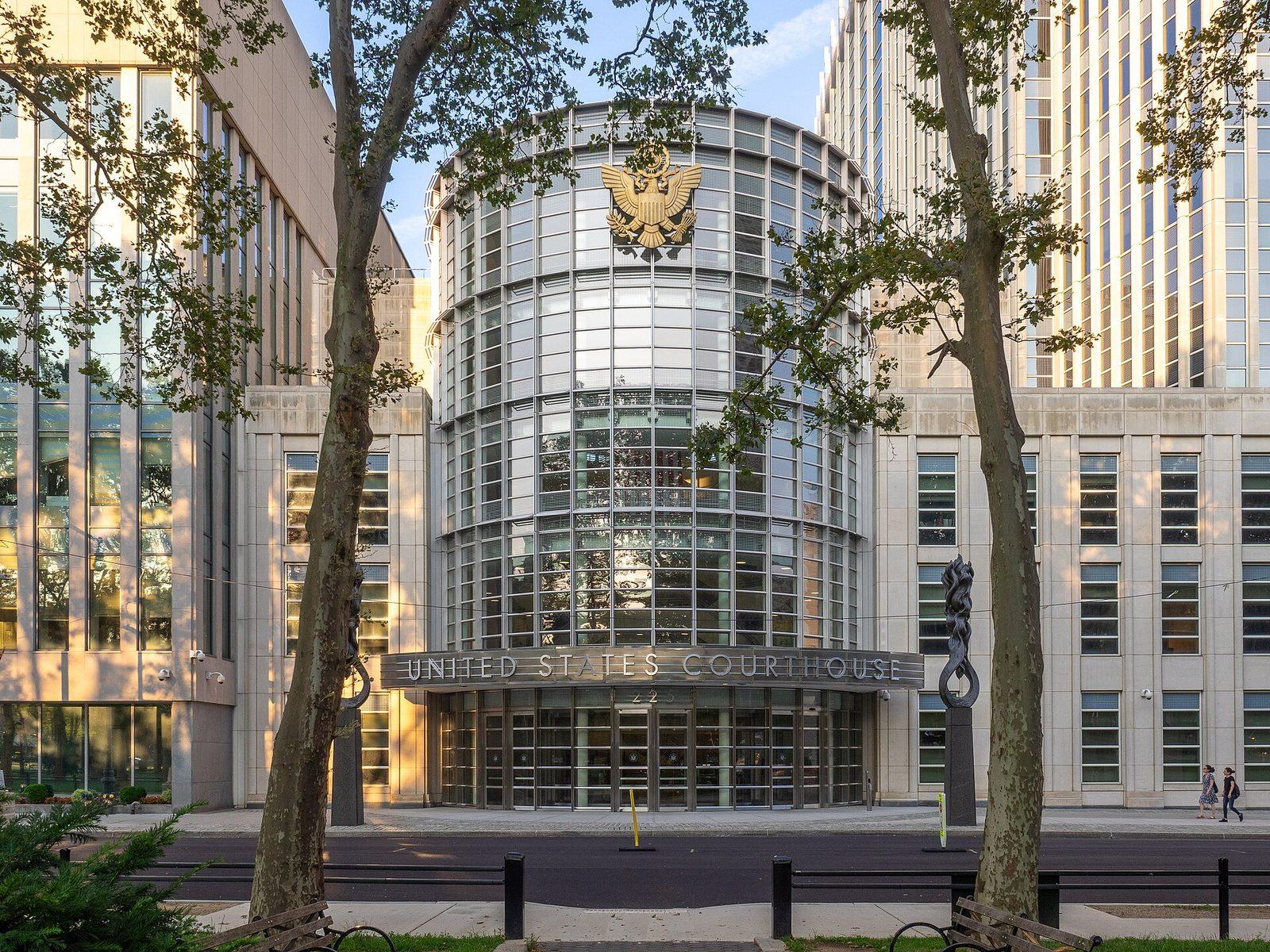
Photo: Ajay Suresh, CC BY 2.0, via Wikimedia Commons
A federal jury in Brooklyn convicted Huawei Technologies Co., Ltd. and three of its subsidiaries on Tuesday of conspiring to steal trade secrets, defrauding banks, violating American sanctions on Iran and laundering money, at the end of a twelve-week trial that the Justice Department built out of two decades of the company’s conduct. The jury convicted one or more of the four entities on each of the counts the department listed in announcing the verdicts, and, as CNN and Reuters reported, found the defendants guilty on ten of the twelve counts in the case, acquitting them of racketeering conspiracy and of conspiracy to obstruct justice. Sentencing is set for September 14, 2027.
The convicted entities are Huawei Technologies, its Chinese subsidiary Huawei Device Co. Ltd., and its American subsidiaries Futurewei Technologies Inc. and Huawei Device USA Inc. The trial ran before United States District Judge Ann M. Donnelly in the Eastern District of New York, on a docket opened in 2018 (No. 18-CR-457 (S-4) (AMD)). The convictions, spread across the four entities, cover wire fraud and bank fraud, each charged on its own and as a conspiracy, plus a conspiracy to steal trade secrets, a conspiracy to defraud the United States, conspiracy and substantive violations of the International Emergency Economic Powers Act, and a money laundering conspiracy. More than 60 prosecution witnesses and 15 defense witnesses testified, CNN reported.
Iran, run through Skycom
What the jury found, as the Justice Department summarized the proof, is that Huawei helped the government of Iran build and run its networks while denying that it did. The department said the evidence showed Huawei providing turnkey services for an internet backbone and broader mobile network access in Iran, giving the Iranian government, and in particular Zaeim, part of its intelligence apparatus, the ability to watch and censor what internet users could reach, and supplying surveillance cameras that let the government monitor protest activity.
The Iran business was conducted through an entity called Skycom. The jury found that Huawei lied about it repeatedly and in every direction: to banks, to journalists and to the United States government. It denied helping Iran’s government, its military or its intelligence services, at the very time it was helping them; it said it had begun restricting its Iran business in 2011 when the business continued for at least another decade; it described Skycom as a business partner when Skycom was a wholly owned subsidiary; and it said it complied with all applicable sanctions when, the department said, it knew each of those statements was materially false. The point of the lies, the jury found, was money: billions of dollars in credit and loans from banks, and continued access to United States dollar clearing, which kept Huawei a sophisticated participant in the global telecommunications market.
The thefts
The trade-secret counts were proved, the department said, through episodes that read like a catalogue of the industry’s anxieties. Huawei signed a non-disclosure agreement to get access to Tappy, the robot T-Mobile used to test touchscreen responsiveness, intending from the start to break the agreement; its employees sent photographs and technical details back to China, and when that was not enough, an employee carried part of the robot out of its controlled laboratory in his backpack. Huawei copied the source code at the heart of Cisco’s routers, which the department called the “crown jewel” of Cisco’s technology, and its engineers’ notes referred to Cisco backwards, as “ocsic”. An employee caught photographing proprietary equipment wore a badge falsely identifying him as an employee of “Weihua”. When CNEX would not collaborate directly, Huawei hired a university researcher as an intermediary, who shared CNEX’s confidential information and gave Huawei direct access to its proprietary hardware. And Huawei took antenna technology from Quintel under a non-disclosure agreement, then filed a patent application using Quintel’s idea with Quintel’s own confidential slide attached.
The statements
“No person or company is above the law,” Attorney General Todd Blanche said. “For decades, Huawei and three of its subsidiaries conducted their business in the United States on the basis of lies and theft.” United States Attorney Joseph Nocella, whose office prosecuted the case, said: “Today’s verdict is a step towards accountability for Huawei’s criminal activities, which includes yearslong collaboration with sanctioned entities in Iran, repeated lies to banks, and blatant thefts from U.S. technology companies.”
For the defense, Brian Heberlig said the company was disappointed by the convictions and that the acquittal on the racketeering count, the charge that would have cast Huawei as a criminal enterprise, vindicated its “good-faith compliance culture.” “We fully expect to appeal,” he said. The defense had argued at trial that the banks knew about Huawei’s Iran business and competed for it, and Heberlig accused prosecutors in closing of cherry-picking a handful of disparate incidents to support a twenty-year conspiracy claim. Huawei, in its own statement, welcomed the racketeering acquittal and described the trade-secret disputes behind the convictions as previously resolved civil matters.
What comes next
The penalties are financial, and they are still to come: criminal fines, forfeiture and restitution are all available to the court, in amounts Judge Donnelly will set at the September 2027 sentencing. The case began with an indictment in 2018 and became public that December with the arrest in Canada of Huawei’s chief financial officer, Meng Wanzhou, who spent nearly three years fighting extradition before she entered a deferred prosecution agreement, acknowledging in it that Huawei had illegally done business in Iran, a statement prosecutors put before this jury. The charges against her were later dropped. The verdict now stands on its own: a jury’s findings about the company’s conduct, an appeal promised, and a sentencing date ten months away.
No corrections have been published for this article.