
Threats
Nvidia’s Board Gets a Preservation Order From the Senate. The Justice Department, It Turns Out, Never Opened a File on Huang.
The reinstatement has reached Congress in three forms at once: a senator’s letter ordering Nvidia’s board to preserve everything and name every official who called, a public accusation from the Senate’s Democratic leader that Jensen Huang broke export law, and an attorney general who, asked whether Huang was exonerated, asked what the question meant. Underneath all three sits a reported fact that reframes the first two: the Justice Department never opened a formal investigation of Huang at all.
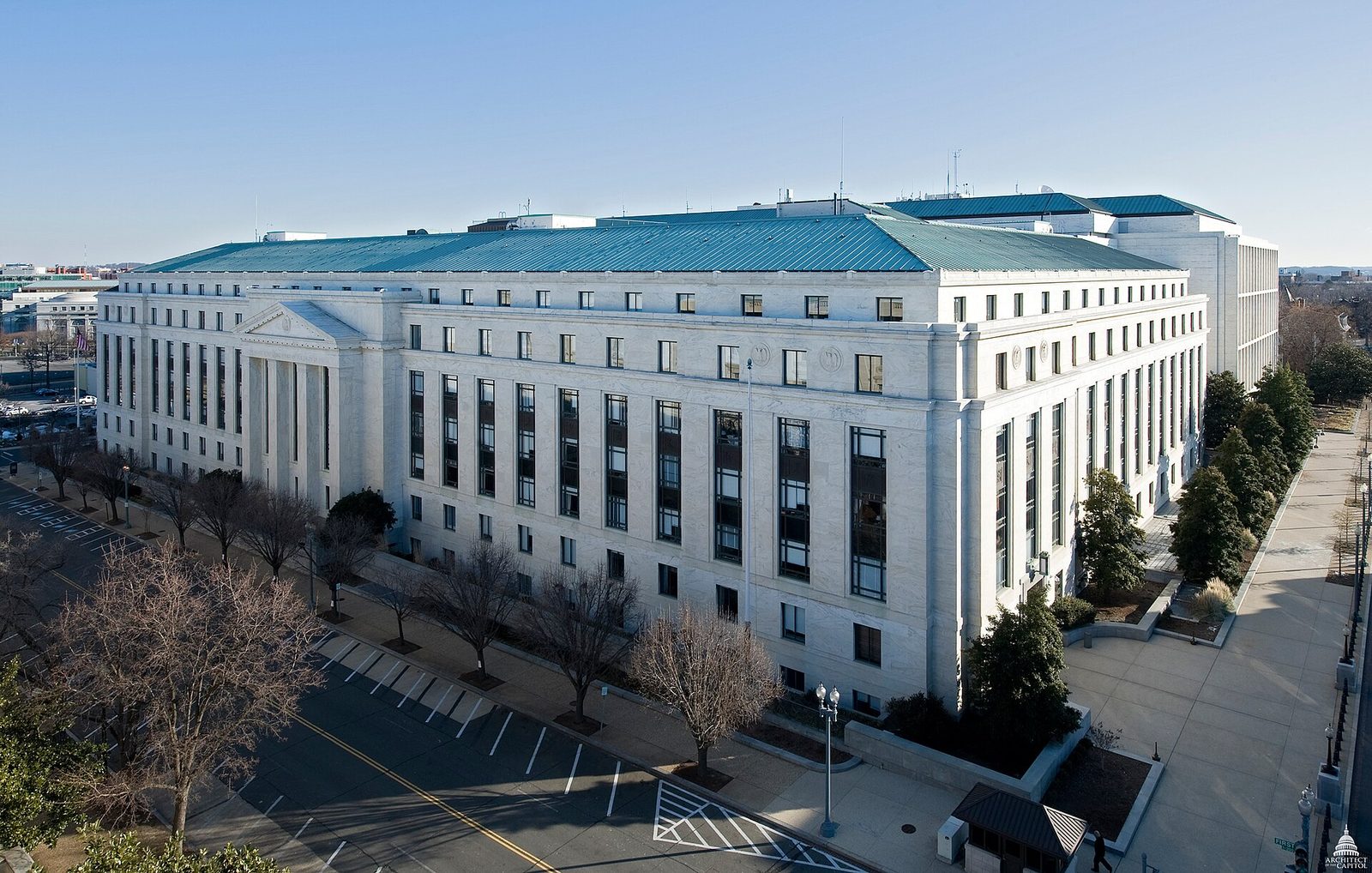
Photo: Architect of the Capitol, public domain, via Wikimedia Commons
Senator Cory Booker has written to Nvidia’s board chairman demanding the names of every federal official who spoke to the board in the eleven days between Jensen Huang’s resignation and his reinstatement, the assurances President Trump gave about Huang’s position, and preservation of the board’s records, including the records of the independent investigation into the company’s export-control compliance. The letter, dated Wednesday and addressed to Chair Harvey C. Jones, is the first formal congressional demand aimed at the board itself.
Booker is the ranking Democrat on the Senate Judiciary antitrust subcommittee and is in line to lead it when the new Congress begins in January, which gives the letter a second edge: its subject is not only the reinstatement but Nvidia’s market power. Reuters, which saw the letter, reported that Nvidia did not immediately respond. The full text has since been published by Booker’s office, and it is the document this report follows.
Five questions, one preservation order
The letter asks five questions, with answers due by December 16. Nvidia is to identify each federal official or employee who communicated with any board member, executive or representative about the resignation or reinstatement between November 12 and November 23, with the date, participants and substance of each contact. It is to describe the “assurances” the president provided that Huang did not pose a threat to national security, including any representation that Huang would not face criminal investigation, prosecution or liability. It is to name any official who raised regulatory subjects with the board in connection with the reinstatement, from export licensing and its enforcement to antitrust review and federal contracts. It is to describe everything the board considered in the six days between announcing that Huang would not return and voting to reinstate him. And it is to produce every analysis the board conducted, commissioned or received on what the resignation or the reinstatement would do to the share price, the company’s market position, its customers, its supply relationships and its investments in customers.
The preservation demand runs wider than the questions. Booker lists six categories of records, among them the complete file of the independent investigation the board and the company are running, which covers the reported foreign intelligence targeting of Huang, the company’s export-control compliance, and any movement of Nvidia chips toward Megaspeed or other China-connected entities. The records run from January 1, 2026 to the present, and the definition reaches email, text and ephemeral messages, naming Signal, WhatsApp, Slack and Google Chat, calendars, board materials, data sets, source code, and AI prompts and outputs. Nvidia is asked to suspend any auto-delete or retention policy that would destroy them, to notify each custodian in writing, and to confirm the steps in writing by December 16.
The dominance argument
The letter’s premise is that the reinstatement is an antitrust event. It puts Nvidia’s share of the data centre AI GPU market at an estimated 80 to 81 percent, describes the CUDA software ecosystem as a lock-in built over nearly two decades, and points to the company’s commitment of up to $100 billion to OpenAI, its stake in CoreWeave with an agreement to buy any CoreWeave capacity left unsold through 2032, and more than $40 billion put into equity stakes in AI companies in 2026 alone, most of which buy its chips. Nvidia’s market value, the letter says, is roughly $4 trillion, and it rose by nearly $1 trillion on the day the board reinstated Huang, a swing the letter attributes to a single personnel decision.
Booker’s argument is that the antitrust laws exist for exactly this situation: a company so dominant that a change at the top, on its own, threatens “household savings and the broader economy.” Booker wrote that the consequence is political as much as economic: “When a dominant firm’s leadership decisions move markets this sharply, the firm gains leverage over the officials responsible for holding it accountable. The White House’s intervention appears to show that dynamic at work.”
The sequence the letter recites is the one the board has not disputed: Huang resigned on November 12; the board announced to investors days later that he would not be rehired; the president intervened; and on November 23 the board reversed itself, saying it had received “input from senior levels of the United States government.” Trump has since confirmed, in the letter’s account of his CNBC interview, that he spoke with the board “directly and indirectly” and “convinced” it.
The accusation, and the licence record
On Tuesday, a day after the reinstatement, Senate Democratic leader Chuck Schumer posted on X that Huang had “shipped extremely advanced chips to China, violating US export control law,” in what he called the equivalent of “selling rocket engines to the Soviets during the Space Race.” Nvidia and the White House did not immediately comment, Reuters reported. It is an accusation by a named senator, and it should be read as one: no charge of that kind, against Huang or against Nvidia, has been reported, and the shipments at the centre of the argument were made under licences the Commerce Department granted.
The licensed record is this. In the quarter that ended on October 25, Nvidia’s China sales of Hopper data centre products, all of them licensed, came to $2.4 billion, about 2.1 percent of the $115.8 billion the company took in, and it has since stopped shipping them. Between December 2025 and May 2026, the Bureau of Industry and Security approved more than 879,000 advanced chips for China out of more than 3.4 million sought, according to licensing documents the House Foreign Affairs Committee released on November 19. Nvidia’s own account is that the approvals carried strict conditions and limited volumes, and that it has stopped shipping H200s to China even where licences were granted.
Under the Export Control Reform Act, the offences are exporting without authorization, exceeding a licence, or making false or misleading statements to the Commerce Department. Shipping under a licence the government granted is not, by itself, a violation. A case built on licensed shipments would turn on knowledge or misrepresentation: what the seller knew about the end users, and what it told the government. Neither has been charged. That distinction is the ground on which the December hearings will be fought, because it is the ground on which a political accusation either becomes a legal one or does not.
“Exonerated,” examined
Trump told CNBC on Monday that the Justice Department had done, in his words, “a pretty good investigation,” and that its conclusion was that Huang was “exonerated.” At a Justice Department press conference the next day, Attorney General Todd Blanche was asked repeatedly whether the department had investigated Huang before reaching that view, and he declined to adopt the word. “What does that mean? Had Huang been investigated? For what?” he answered. “What I said last week is that we were looking into it. The FBI, law enforcement looks into things all the time. That doesn’t necessarily become a criminal investigation, doesn’t necessarily become an indictment. It just literally is that: It’s looking into things.” Pressed on an export investigation, he said he did not know what the question referred to, noting that the department runs hundreds of export investigations at any time. He closed the subject with the sentence the department has stood behind: “I have no reason to stand up here and say that Nvidia is anything but a good corporate citizen.”
What officials say happened inside
Reuters reported on Wednesday, citing three people familiar with the matter who spoke on condition of anonymity, that the Justice Department did not open a formal investigation into Huang before the reinstatement. On that account, Blanche’s conclusion that there was no evidence Huang had broken laws rested on the department’s running investigations into two Nvidia customers, Super Micro Computer and Megaspeed International, both suspected of smuggling advanced chips to China. The customer probes found no evidence that Huang acted as an agent of China or knowingly transferred sensitive technology or information, the people said; Nvidia itself was not a target, the people said, and it cooperated with both probes; and there was no counterintelligence investigation of Huang himself, though American spy agencies have gathered information on Alice Huang. Blanche conveyed the conclusion to Trump and Vice President JD Vance over the weekend, two of the people said, and Trump and Vance conveyed it to the board. The determination is subject to change as the probes continue, the people said, and none of the three agencies, the Justice Department, the FBI or the Director of National Intelligence’s office, would comment. The Wall Street Journal first reported that Blanche’s assessment rested on the two customer investigations. Reuters also reported, citing a law enforcement official familiar with the briefings, that the FBI has given Nvidia’s leadership at least two “defensive briefings” on Chinese espionage tactics.
December 1 to 3
Huang gives a closed-door transcribed interview to three House committees on December 1. Nvidia’s general counsel, Tim Teter, follows on December 2. On December 3, Huang testifies in public before the Senate Banking Committee, in a hearing titled “Protecting America’s AI Advantage: Oversight of U.S. Export Controls.” Senators in both parties have said the hearing will not be gentle. Senator John Kennedy, a Banking Committee member, called the matter “serious as an aneurysm.” Senator Kevin Cramer, speaking on CNBC, said the problem was what Congress does not know, and that lawmakers might even have to put “a babysitter on Jensen Huang.” Nvidia’s shares, which rose about 31 percent on the reinstatement, fell about 8 percent in early trading on Wednesday as the congressional reaction built.
The board’s own investigation, run by outside counsel, continues, and no findings have been published. What Congress does in the next week will test two different propositions at once: whether a board that reversed itself after a presidential intervention can account for the reversal, and whether the export case against Nvidia is a case at all, or a licensing policy that Congress dislikes and a set of customer investigations that have not reached the company. As of today, the second proposition has produced an accusation, a preservation letter and a hearing date. It has not produced a charge.
No corrections have been published for this article.