
Threats
Jensen Huang Resigns as Nvidia CEO as Export-Control Probes Circle Megaspeed
The founder is out with no reason stated, four days after the board announced an independent investigation, while the Justice Department runs a criminal inquiry into a Singapore customer and three House committees wait for answers he never sent.
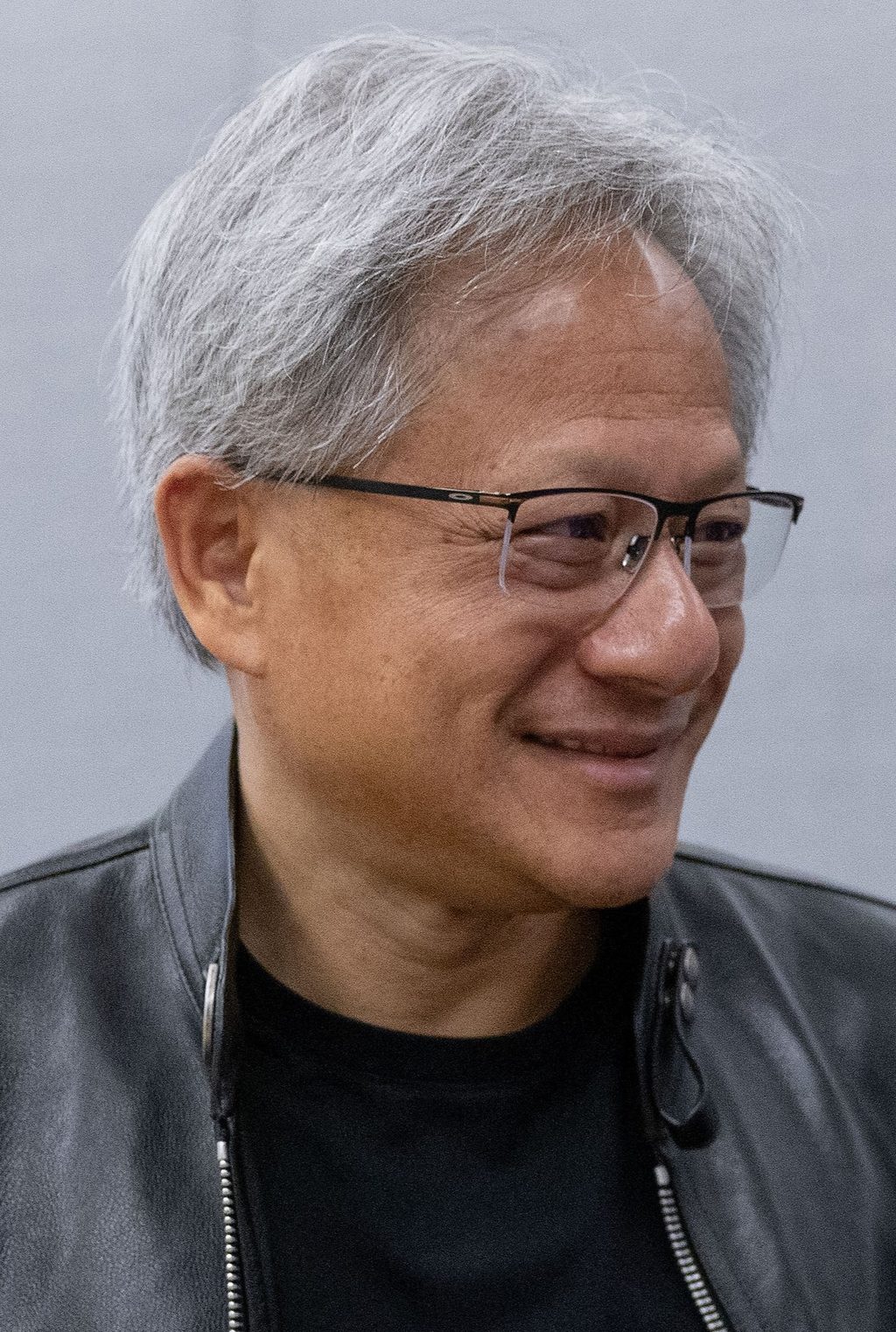
Photo: Peter Dasilva / European Union, CC BY 4.0, via Wikimedia Commons
On Thursday, November 12, 2026, Nvidia said its co-founder Jensen Huang had stepped down from every post he held at the company — president, chief executive and board member — with the departure taking effect at once, closing out a 33-year run at the head of the chipmaker he helped start in 1993. The company gave no reason for the departure. Its Form 8-K, filed the same day, records that the board accepted the resignation on November 11.
Chief Financial Officer Colette Kress, in the finance job since September 2013, serves as interim Chief Executive Officer while keeping the CFO role, until a permanent successor has been named. The board said it is initiating a search and will consider internal and external candidates. Harvey C. Jones, a director since 1993, was appointed the board’s first-ever Chair. In the release, the board said: “The Board and the company thank Jensen for his immeasurable contributions to the company and the industry.” The company said operations, customer commitments and the product roadmap continue without interruption.
The market read the silence as part of the story. Nvidia shares fell more than 10 percent in premarket trading on Thursday, to about $156 a share, June 2025 levels; CNBC recorded a 10.4 percent drop as of 8:59 a.m. ET, and Bernstein halved its price target on the stock, from $400 to $200, the same morning, according to CNBC reporting carried by CoinDesk.
Four days from investigation to exit
On Sunday, November 8, Nvidia announced that its board had opened an independent investigation, run by independent directors assisted by outside counsel, into reports that Huang had been the target of a foreign intelligence operation. The board said at the time that it had no reason to believe company secrets or national security had been compromised. Reporting since then identifies the outside counsel as Wachtell, Lipton, Rosen & Katz, led by a former acting US Attorney for the Southern District of New York. Thursday’s transition release does not mention the investigation and does not say whether it has closed.
The reports behind the investigation were published by the New York Times and the Financial Times in late October and early November, citing unnamed officials: US intelligence concluded that Alice Huang, a former executive of Singapore-based Nvidia customer Megaspeed, had been recruited by China’s Ministry of State Security and had targeted Huang and Nvidia hardware information. Those conclusions are intelligence assessments reported by newspapers, not findings in any court or public record, and China’s embassy has rejected the allegations. No charges have been reported against Alice Huang, Jensen Huang, or anyone else in this thread.
The export-control file underneath: Megaspeed
The security case that does not depend on anonymous sourcing is the export-control one. The New York Times reported on November 9 that the Commerce Department’s Bureau of Industry and Security paused its own investigation of Megaspeed after the Justice Department asked it to, and that the matter is now a Justice Department criminal inquiry into potential violations of US export restrictions on advanced AI chips. An inquiry is an investigation, not a charge, and the Justice Department does not comment on continuing investigations.
Megaspeed is not on the Commerce Department’s Entity List, the designation that would cut it off from US technology, and Commerce has added no company to that list in more than a year. The Financial Times reported on November 10 that the State, Defense, Energy and Treasury departments had all called for Megaspeed to be listed, while Commerce, which chairs the committee that decides, put off new listings. Nvidia’s own position is on the record: a company spokesperson told the Financial Times that Megaspeed “is not on the Entity List or a recipient of a Commerce Department advance notice letter, but in June 2025 we placed it on our own blocked-transaction list, barring further sales and shipments,” and that the voluntary block remains in place.
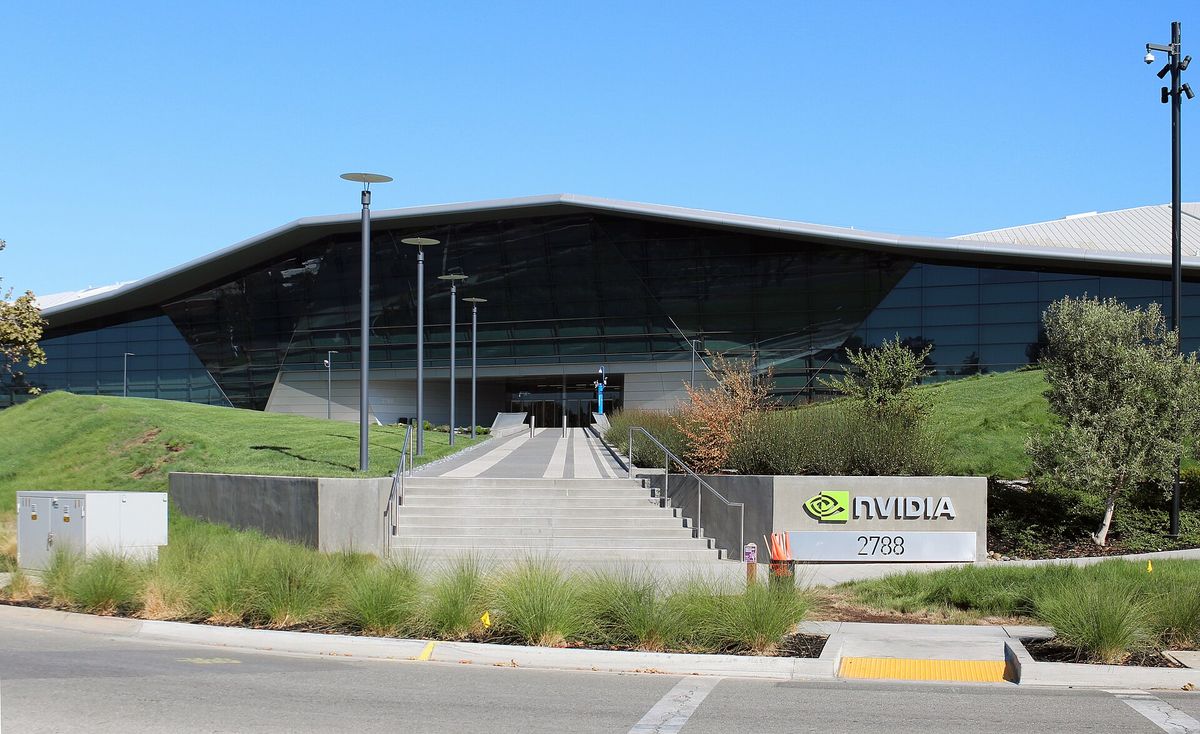
Photo: Coolcaesar, CC BY-SA 4.0, via Wikimedia Commons
Singapore’s answer narrows the record
Singapore’s Ministry of Home Affairs published its own account on November 12, and it cuts against the espionage framing in one specific, important way. The ministry said the Singapore Police Force and Singapore Customs began investigating Megaspeed and its controllers in February 2025 over possible inaccurate declarations relating to server purchases. Alice Huang, then Megaspeed’s chief executive, chairperson and one of its key controllers, was investigated in that matter. In February 2026, after consulting the Attorney-General’s Chambers, police concluded there was insufficient evidence that she had committed offences relating to those possible inaccurate declarations.
She did not leave clean. The ministry said investigators found parts of what she told them to be untrue, and that the effect of those answers was to play down how central she was to Megaspeed. Police let her go with a stern warning, but she may not come back to Singapore; her passport was handed back on February 26, 2026, and she left that day. The ministry stated plainly, as Reuters also reported, that the investigation did not concern espionage. Police investigations into Megaspeed and six other individuals remain ongoing in Singapore.
What happens next
The congressional track is now untethered from Nvidia’s org chart. The chairs of three House committees, Foreign Affairs, the Select Committee on the Chinese Communist Party, and Intelligence, had asked Huang for a closed-door briefing on November 18 and set November 11 for his reply. The deadline passed with no public reply, and on November 11 the chairs confirmed on the record that none had arrived. Asked about a subpoena, Rep. Brian Mast answered yes; Rep. John Moolenaar said the committees have subpoena power and added: “We are going to continue to pursue this.” Huang is now a former executive rather than a sitting CEO, which changes the politics of compulsion, not the committees’ authority. Separately, House Democrats have asked Commerce Secretary Howard Lutnick for written answers about the Megaspeed deliberations by December 1.
The first corporate test arrives in five days. The release confirms the reporting date rather than moving it: “NVIDIA will report its third-quarter fiscal 2027 financial results on Tuesday, November 17, at approximately 1:20 p.m. PT, as previously scheduled, followed by its earnings call at 2 p.m. PT.” Kress will lead that call as interim CEO. What the call says, or declines to say, about China revenue, export compliance and the board’s investigation is the next verifiable milestone in a story that has so far been driven by documents: a board announcement, an 8-K, a ministry statement, and a deadline that passed in silence.
Update, November 13, 2026: the briefing becomes a December interview, and a deadline falls tonight
The November 18 briefing described above no longer exists in that form. In a letter dated November 12, the three House committee chairs, Brian Mast of Foreign Affairs, John Moolenaar of the Select Committee on the Chinese Communist Party, and Rick Crawford of Intelligence, asked Huang, addressed through his lawyer Walter Brown of Paul, Weiss, to appear for a closed-door transcribed interview on December 1, an accommodation, the letter said, to reflect recent events. Nvidia’s general counsel, Tim Teter, is asked to appear on the same terms on December 2, and the committees have separately asked Jeffrey Kessler, the Commerce Department’s under secretary for industry and security, to testify at a hearing on December 3. The letter sets a hard edge: written confirmation by 8 p.m. ET on Friday, November 13, or the Foreign Affairs Committee will issue a subpoena; the other two committees reserve subpoenas of their own.
A second, public track opened the same day. Tim Scott, who chairs the Senate Banking Committee, wrote to Huang inviting his voluntary testimony at a public hearing on December 3 and to Commerce Secretary Howard Lutnick for December 10, and said he would consider subpoenaing Huang if he does not appear voluntarily. Mast had told reporters earlier on November 12 that Huang had tentatively agreed to testify under oath ahead of Thanksgiving; the written letter supersedes that arrangement in both date and form, and tonight’s deadline is what decides whether December 1 proceeds voluntarily or under compulsion.
The espionage question has now received its first on-record response from the Justice Department, and it is a deliberate non-answer. Attorney General Todd Blanche told reporters on November 12 that the department has “not yet reached a conclusion” on whether Alice Huang spied for China.
On the other side of the record, CNN reported on November 12, citing multiple sources in the US intelligence community, that the intelligence collected on Alice Huang to date does not prove she was acting as a spy for Beijing. According to that reporting, there is disagreement inside the community: officials in the Office of the Director of National Intelligence close to Director Jay Clayton regard the “spy” characterization as “not entirely accurate and over-torqued,” CIA officials are not yet convinced the collection, including intercepts, proves she knowingly funneled information to Beijing, and Rep. Jim Himes, the ranking Democrat on the House Intelligence Committee, told Politico after a classified briefing this week that he remained unsure of the nature of her relationship with the Chinese government. That reporting rests on unnamed sources and stands against the intelligence conclusions reported earlier by the New York Times and the Financial Times; neither assessment is a public finding, and no charges have been reported against Alice Huang or anyone else in this thread.
The fight over the Entity List is now being conducted in public, at cabinet level. Treasury Secretary Scott Bessent told CNBC on November 13 that the Treasury, State and Defense departments and the US Trade Representative had favored placing Megaspeed on the export blacklist for months, and that Commerce “has the pen”; asked about the delay, he said, “You would have to ask them about their internal processes.” A Commerce spokesperson had earlier told CNBC that a reported confrontation between Bessent and Lutnick did not occur, and the White House said on November 12 that the president “maintains complete confidence” in Lutnick. Reuters reported, citing two people familiar with the discussions, that senior White House officials are discussing whether Lutnick should be pushed out; no decision has been made. Megaspeed remains off the Entity List, and until there is a new development on the export-control front, the December calendar above (earnings on November 17, answers from Lutnick due December 1, and the December 1, 2, 3 and 10 appearances) is the spine of this story.
Update, November 17: Five days after this report, Washington moved on three fronts at once. The Bureau of Industry and Security released an interim final rule that puts large-scale remote access to advanced chips under licence; the Commerce and Justice departments published their Megaspeed investigation timeline, confirming a probe opened in 2024, a records request to Nvidia in May 2025 and an on-site end-use check in Singapore in June 2025; and Nvidia’s board created a standing National Security and Export Control Oversight Committee. The full follow-up is here.
No corrections have been published for this article.