
Threats
USTR Finds Excess Capacity in Fourteen Economies and Proposes Tariffs From 15 to 35 Percent. Nothing Takes Effect Yet.
Washington has completed the legal half of its largest trade action of the year. The United States Trade Representative has determined that fourteen economies, allies and rivals alike, run industrial policies that are unreasonable under American trade law, and has proposed tariffs on every one of them. The rates run from 15 percent to 35, with a 40 percent alternative written into the China notice. The other half, whether any of it is ever collected, is now a public argument with two January dates.
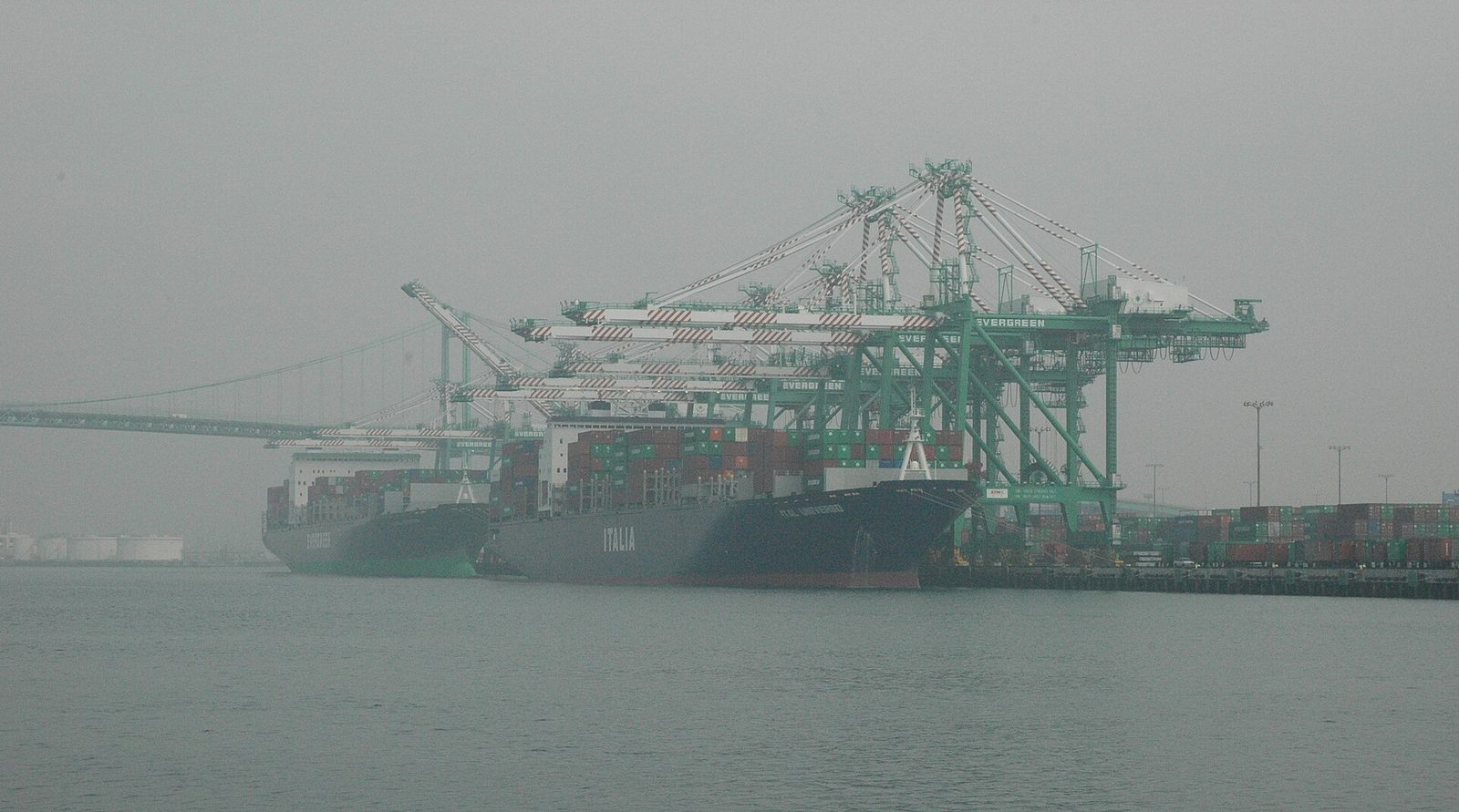
Photo: Marshall Astor, CC BY-SA 2.0, via Wikimedia Commons
The United States Trade Representative determined on Tuesday that the industrial policies of fourteen economies are unreasonable and burden or restrict American commerce, and proposed a new round of tariffs on all fourteen, at rates from 15 to 35 percent. The determinations, made under Section 301 of the Trade Act of 1974, cover China, the European Union, Singapore, Switzerland, Indonesia, Malaysia, Cambodia, Thailand, Korea, Vietnam, Taiwan, Bangladesh, Japan and India. They are proposals. No tariff in this package is in effect, no effective date has been set, and the next step is a public comment round that closes on January 5, 2027.
Trade Representative Jamieson Greer said trading partners had spent decades building industrial strategies on manufacturing targets, wage and labour suppression, state support and non-market inputs, tilting the trade balance in their favour while eroding America’s manufacturing base. “President Trump is proposing to take action to bring about the elimination of these unfair acts, policies, and practices,” he said, in order to “level the playing field for American workers and chart a new, more sustainable course for the world economy.”
USTR opened the investigations on March 11, 2026, covering sixteen economies. It made no determination for Mexico or Norway. The first round drew testimony from nearly 140 witnesses and more than 1,070 written comments, and each of the fourteen determinations is supported by an economy-specific report published with the announcement.
The proposed rates
Five economies are proposed at 15 percent: the European Union, Japan, Korea, Switzerland and Taiwan, in each case net of most-favoured-nation rates and existing Section 301 tariffs, so the new duty tops up what is already charged toward that level rather than stacking on top of it. Five more are proposed at up to 18 percent, net of existing Section 301 tariffs: Bangladesh, Cambodia, Indonesia, Malaysia and Thailand. Singapore is proposed at up to 20 percent, with USTR saying it will consider a 10 percent rate if Singapore reaches a reciprocal trade agreement responsive to the findings. India is proposed at up to 25 percent, adjustable to 17 percent on the same condition. Vietnam carries the highest proposed rate, up to 35 percent, adjustable to 20 percent with an agreement.
China’s structure is different. USTR proposes up to 20 percent on Chinese goods not listed in the notice’s annexes, and up to 10 percent on the goods in Annex A, in each case net of the rate already imposed under the separate Section 301 investigation into goods produced with forced labour. Goods in Annex B are exempt; Annex B collects the “30-For-30” lists, the products the U.S.-China Board of Trade has recommended for reduced tariff treatment. The China proposal is framed around the Kuala Lumpur Joint Arrangement the two presidents announced on October 30, 2025. And the China notice carries the package’s sharpest alternative: if the Trade Representative finds that ongoing engagements with China inadequately address the issues, he proposes to consider a tariff of up to 40 percent on all goods of China.
For most of the fourteen, the proposed rates also interact with the tariffs imposed in July 2026 under the separate forced-labour Section 301 action. Wiley, in a summary of the notices, notes that for the non-China economies the new rates generally operate as a combined rate with those duties rather than stacking fully on top of them.
The higher alternatives
China is not the only economy with a second, higher number in its notice. On Wiley’s reading of the fourteen notices, eleven economies face a higher alternative rate if USTR finds consultations and commitments unsatisfactory: up to 20 percent for the European Union, Japan, Switzerland and Bangladesh, and up to 25 percent for Korea, Taiwan, Cambodia, Indonesia, Malaysia and Thailand, alongside China’s 40 percent. Singapore, India and Vietnam have no higher alternative in their notices; their second numbers run the other way, down to the agreement rates. The alternatives are written into the individual notices, China’s included.
What was found unreasonable
The findings follow a pattern with local variations. For nearly every economy, USTR cites industrial plans that target manufacturing, production incentives, financial repression, inadequate labour protections, and a failure to address global excess capacity, including capacity fed by imports and investment from non-market economies. China’s list is the longest: long-standing industrial plans and targeting, extensive support to manufacturers and to state-owned enterprises on non-commercial terms, forced technology transfer, intellectual property theft, forced labour, lax environmental enforcement and currency practices, across sectors from aluminium and automotive to semiconductors, ships and wind. Vietnam’s findings add a point the others do not carry in the same form: the notice faults Hanoi for encouraging, or failing to address, transshipment of goods from other non-market economies. In each case USTR found the burden on American commerce runs three ways: lost commercial opportunities for American producers at home and in third markets, lost production, exports, jobs and investment in American manufacturing, and increased economic security risk.
What happens next
Written comments and requests to appear are due by January 5, 2027, filed through USTR’s comments portal; for China, comments go to Docket No. USTR-2026-0278 and hearing requests to USTR-2026-0741. The Section 301 Committee opens public hearings on January 25, 2027, in the main hearing room of the U.S. International Trade Commission in Washington. The notices carve out exemptions as they go: Vietnam’s, for example, excludes articles already under Section 232 tariffs, including steel, aluminium, copper, vehicles and parts, wood products, patented pharmaceuticals and semiconductors, along with informational materials, donations, accompanied baggage and a list of raw materials whose taxation, USTR says, could leave domestic supply unavailable. Final action can only follow the hearings, and the rates, the scope and the timing can all change in that process. What Tuesday settled is the legal finding. The tariffs themselves are still an argument, with a date.
No corrections have been published for this article.